
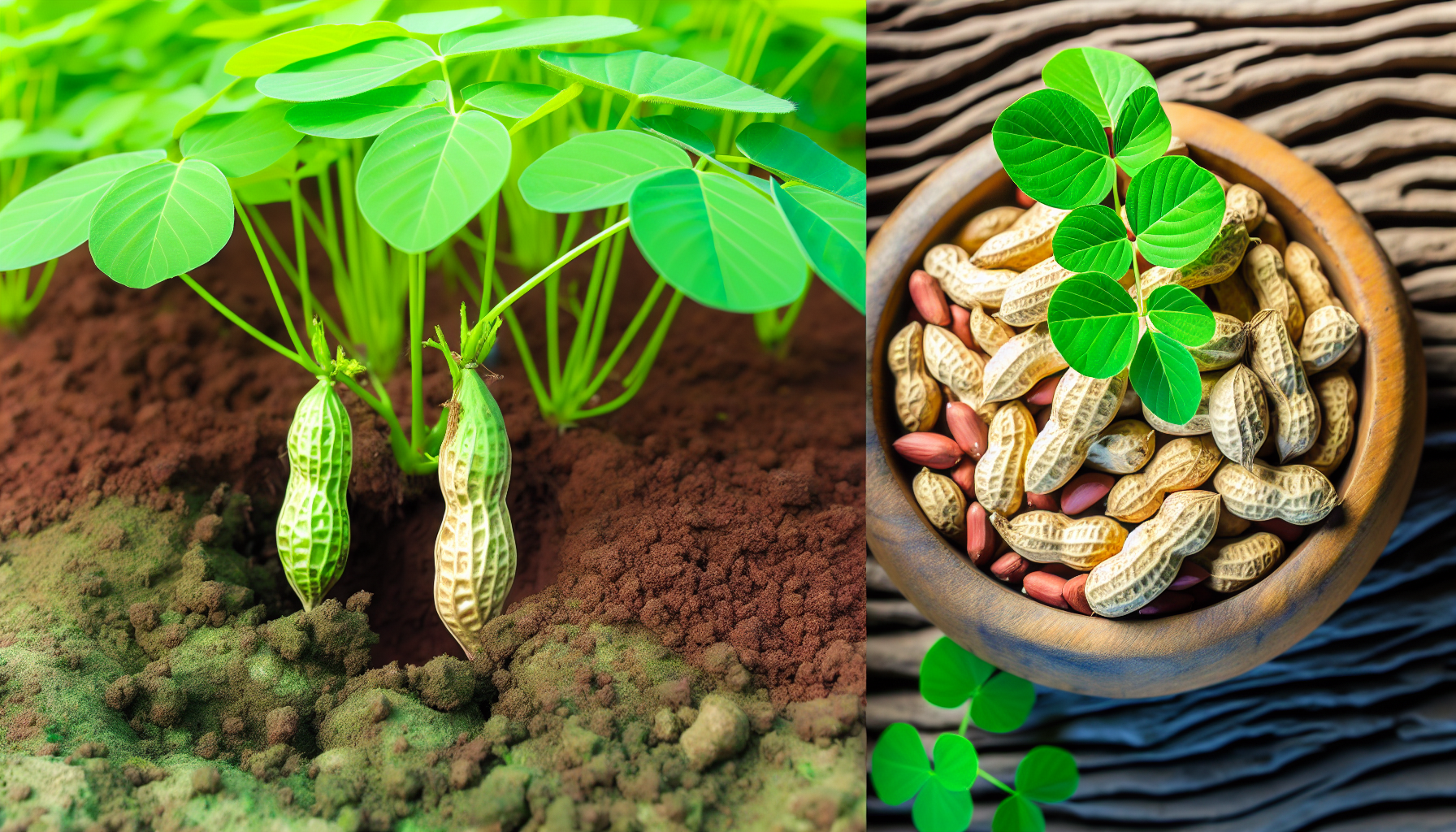
Peanuts, commonly known as groundnuts, are an intriguing legume that plays a significant role in culinary traditions around the world. Hailing from South America, these nutrient-rich seeds are not only delicious but also packed with health benefits. This article dives deep into their unique botanical characteristics, historical significance, and culinary applications.
Botanical Characteristics and Growing Process
Peanuts, scientifically known as Arachis hypogaea, are classified within the legume family, Fabaceae. This classification highlights their unique botanical attributes, particularly how they resemble both beans and peas. Peanuts exhibit a distinctive growth habit characterized by their geocarpy, which is the fascinating process of flower pollination followed by the elongation of stems, or pegs, that push the developing pods into the soil.
Upon germination, a seed sends a taproot downward and shoots upward, quickly developing a series of compound leaves comprised of leaflets that emerge in pairs. These leaves not only aid in photosynthesis but also contribute to the overall architecture of the plant. After several weeks, flowering initiates, with yellow blooms that emerge shortly above the soil. These flowers are crucial as they self-pollinate, enabling successful fertilization.
Once pollination occurs, the ovary elongates, forming the peg that burrows into the soil. As a result, the peanut pods develop below ground, creating a unique harvesting challenge as opposed to other crops. Each pod contains one to three seeds, surrounded by a papery shell that provides protection. The entire life cycle of the peanut spans approximately 100 to 150 days, with plants generally being tall, reaching heights of about 12 to 18 inches at maturity.
A notable aspect of peanut plants is their symbiotic relationship with nitrogen-fixing bacteria, particularly Rhizobium species. These bacteria inhabit nodules on the roots, converting atmospheric nitrogen into ammonia, which the plants can utilize for growth. This process not only enhances peanut growth but also enriches soil fertility, promoting sustainability in agricultural systems.
The structural design of the peanut plant is noteworthy; convoluted roots support extensive branching, while foliar arrangements maximize light capturing. Overall, the peanut plant exhibits a remarkable adaptation that supports its underground fruit development, showcasing a combination of botanical ingenuity and agricultural importance.
Conclusions
In summary, peanuts are more than just a tasty snack; they are a vital crop with rich history and ecological benefits. Their unique growing process and nutritional profile highlight their significance in agriculture and cuisine. As we cultivate and consume peanuts, it’s important to appreciate their many contributions to our diets and cultures.



لا تعليق